
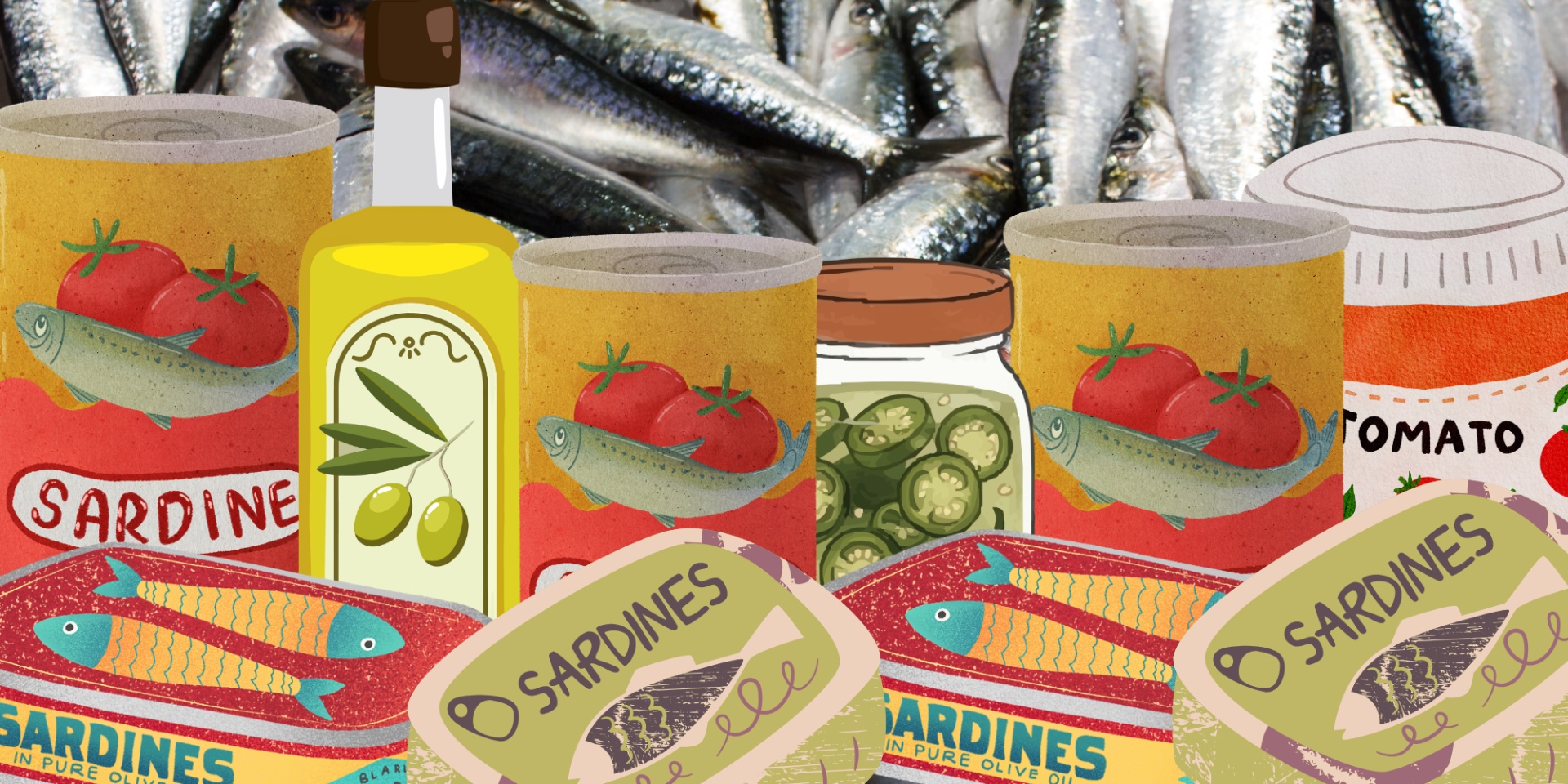
Yes, The Sardine Fast Is A Thing. But Should You Do It?
As the three-day sardine fast takes over social media, we ask two nutritionists whether they'd actually recommend it.
Sardines are in Vogue. Yes, read that again. The oily fish, once known as a cheap eat, has been featured in arguably the world's most prolific fashion magazine as a hack for glowing skin (with caveats, of course). Yet the real surprise is that I knew this was coming.
Social media is bursting with "sardine fast" videos, search terms spanning sardine recipes, best sardines and benefits of sardines are trending on Google, and the sardine challenge even made an appearance on Steven Bartlett's Diary of a CEO podcast with internal medicine physician, author and ketosis expert Dr Boz sparking the somewhat strange craze of the three-day sardine fast.
Dr Boz claims the 72-hour diet reduces blood sugar, surges ketones on the third day, and that she recommends it as a metabolic workout to "patients who aren't so healthy". I want to stress that last line and note that some other medical professionals discuss it in a cancer treatment context, which sits separately to this. Here, the purpose is to avoid eating out of boredom and consume food for sustenance only, she explains. There's no eating window — you can eat as many sardines as you wish, whenever you feel hungry — and you can add hot sauce, pepper, mustard or relish, or cook the sardines if it makes them more appetising.
Yet, as with most health trends that take off on social media, a number of these key points have been lost. Some people are strictly limiting their intake to just three cans a day, others are doing it with the sole aim of losing weight, and then, of course, there are those hoping it will simply give their skin a glow. So, what are other experts saying?
The Good
"Sardines are a nutritional powerhouse. They're rich in high-quality protein, omega-3 fats, calcium, vitamin D and B vitamins, and because you eat them whole, they're brilliant for bone health. From a gut health perspective, their anti-inflammatory omega-3 fats help support a healthy microbiome, while protein promotes stable energy levels," says gut health and hormone nutritionist Eli Brecher.
Nutritional therapist Alexa Mullane expands on the plus points further. "Sardines (especially tinned) are one of the most nutrient-dense and affordable foods available in the supermarket. I've always recommended tinned sardines to my clients, along with tinned mackerel, pilchards (which are actually mature sardines) and salmon, due to the fact that they're cost-effective, convenient and genuinely healthy.
As an oily fish, sardines are rich in omega-3 fatty acids, which are highly anti-inflammatory and support both brain and heart health. They're also naturally high in vitamin B12, vitamin D, iodine, protein and calcium — from the soft, edible bones. And with many people opting for whole foods over ultra-processed convenience options, sardines tick a lot of boxes. They're high in protein, healthy fats and key nutrients, and they're a cornerstone of the well-researched Mediterranean diet, long hailed for its contribution to health, longevity and vitality.
Another plus point about tinned sardines (which also applies to tinned salmon) is that they're nearly always wild-caught, meaning they have a higher nutritional profile than farmed fish. Buying fresh, wild fish is far more expensive and harder to source. Sardines are also remarkably affordable: a tin can cost as little as 55p, making them one of the best-value sources of high-quality protein going, especially when you compare that to fresh salmon, where a single portion can cost £4 or £5.
And while mercury content can be a concern with fish like tuna, sardines are a small fish with much lower mercury levels, so they can be eaten more regularly. In short, sardines support many areas of health — hormonal, nervous system, heart, brain and immune function — as well as energy levels."
The Bad
"In nutrition, there are no quick fixes," says Mullane, before addressing the three most talked-about claims: rapid weight loss, lower blood sugar and improved skin.
"I would never recommend trying to lose weight rapidly, because the faster you lose it, the quicker it returns when you go back to eating normally. Burning fat also releases toxins into the bloodstream, so rapid weight loss can flood the body with them quickly, which can be problematic for other areas of health.
Restrictive eating like this can also foster an unhealthy mindset around food — using it as a quick fix — which I'd never recommend for anyone with a history of disordered eating. Eating only one food for three days means missing out on essential nutrients, including fibre, which could lead to digestive issues. Cutting out fruit and vegetables also means losing the antioxidants and polyphenols that are crucial for skin and overall health.
You also have to consider: what happens at the end of a three-day sardine fast? You go back to eating normally and nothing changes. It's far more effective to look at your overall diet and make small, sustainable tweaks to support blood sugar, weight management and skin health long-term.
It's simply not necessary to eat that much omega-3 fat in such a short space of time. If you want to improve your skin, eat a range of foods containing vitamin C, vitamin A, zinc, healthy fats and fibre every day, and drink plenty of water. If you want to balance your blood sugar, cut back on simple sugars, eat a balanced diet with fibre, protein and healthy fat at every meal, and move your body regularly."
The Verdict
Overall, it's a great thing that sardines are having a moment. As Brecher puts it, "sardines fit perfectly with today's back-to-basics food movement. People want simple, high-protein, budget-friendly and sustainable foods — and sardines tick every box. Social media has helped give them a rebrand from old-fashioned tinned fish to a convenient, nutrient-dense staple."
But the key thing to remember is that "health comes from balance and diversity, not extreme challenges. Sardines are great as part of a varied diet, not as a three-day crash diet," she adds.
"For optimal health, I recommend eating sardines and other oily fish two to three times a week, as part of a balanced diet rich in colourful fruit and vegetables — to reap all the benefits without any of the drawbacks," says Mullane. Time to add them to the weekly shop.
No items found.





.png)
.png)