Everyone's Talking About Lagree, Here's Why
The workout everyone is whispering about? Lagree. Here, Maria Eleftheriou, director of concepts at Psycle tells us whether it's worth the hype and what sets it apart from pilates.
After 16 years in the fitness industry, you see trends come and go. Formats explode and fade, and you start to get very clear on what has real substance and what is just noise. This is why I feel genuinely passionate about the Lagree Method. It is not gimmicky. It is not chaotic. And it is not built around exhaustion for the sake of it.
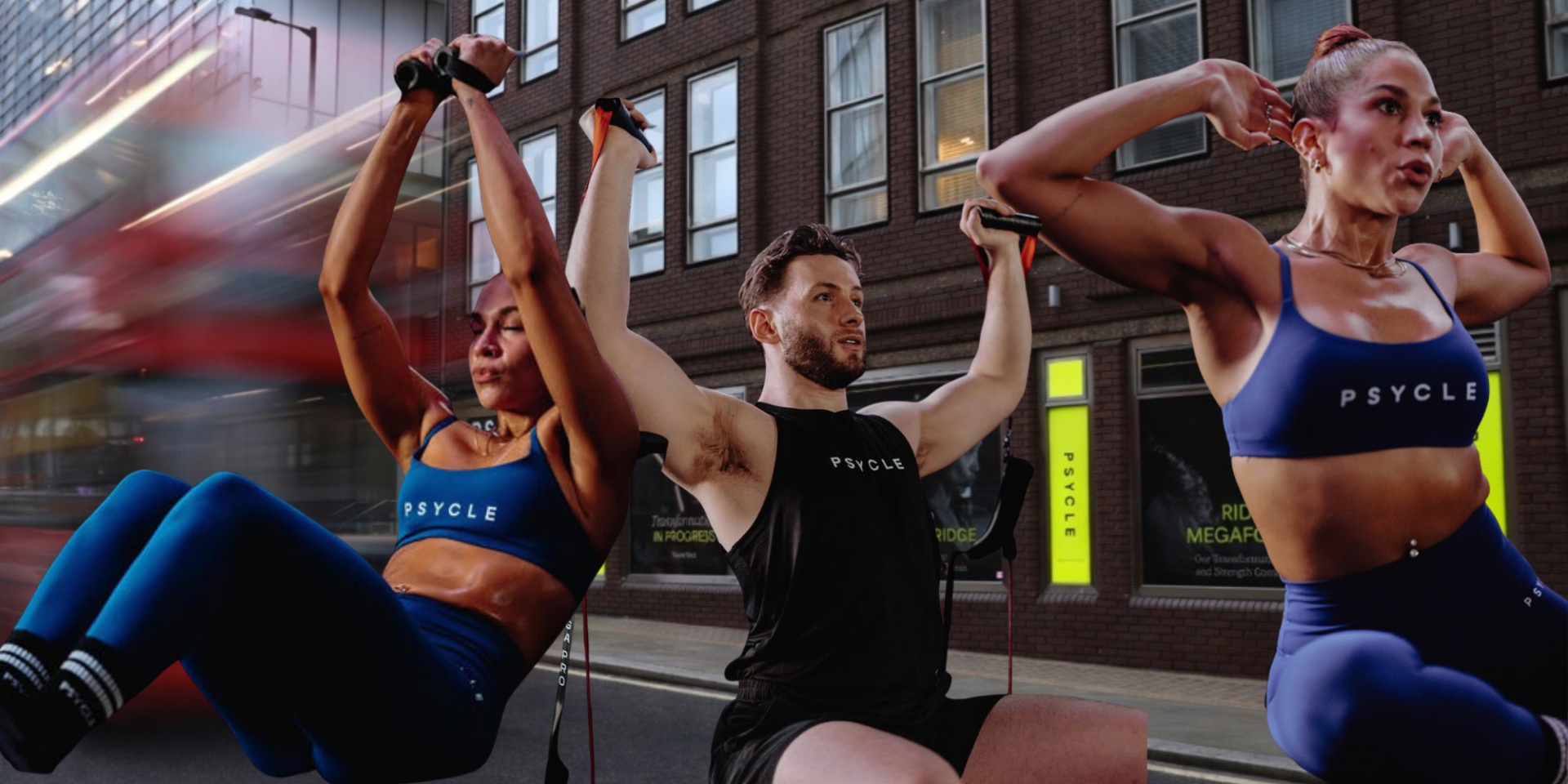
Created by Sebastien Lagree in Los Angeles in the early 2000s, Lagree was designed to deliver high-intensity strength training without high impact, using a machine called the Megaformer. This spring-loaded apparatus creates constant resistance and instability, so muscles remain under tension throughout every movement.
Because of the machine, it’s often compared to pilates. But it’s fundamentally different. Pilates is about alignment, flow and range of motion. Lagree is about slow, controlled muscular endurance under load, where momentum is removed and strength is built through precision and control. The muscles have to work the whole time — there’s no letting up, no bouncing through reps.
After growing rapidly across the United States in cities like New York City and Miami, Lagree is now firmly taking hold in the UK as people become more educated about training and increasingly focused on longevity, posture, structural balance and sustainable results rather than burnout.
Lagree doesn’t just appeal to one type of person, but to a wide range of individuals seeking different results. Think seasoned exercisers who want intelligent strength work, cardio lovers who need low-impact strength training, clients rebuilding after injury, and busy professionals who want efficient, effective programming.
The results are specific and noticeable: stronger glutes and hamstrings, improved upper-back and shoulder strength, better posture, enhanced balance, increased muscular endurance and a deep, controlled soreness through the posterior chain. And while the physical results are real, the mental element is significant too — holding movements for extended periods demands presence and resilience.
Cardio may built your heart and lungs but Lagree builds the strength and structure that support everything else.
As the director of concepts at Psycle London, I wanted to bring the practice into our workout environments. We have integrated Lagree into our wider training ecosystem because we believe in its integrity, layering it with the personality and energy that defines us. The classes are beat-driven, immersive and delivered by expert coaches, including some of the strongest strength and barre instructors in the industry. This makes it feel powerful, precise and human rather than clinical.
But what makes Lagree even more compelling is how well it complements cardio. While cardio builds engine capacity and cardiovascular fitness, Lagree builds the structural foundation by strengthening the posterior chain, stabilising the shoulders, reinforcing core integrity and improving balance. This ultimately enhances performance, recovery and longevity, creating a complete and intelligent training system that aligns perfectly with what I believe the future of fitness should look like. Together, they make training smarter and more sustainable.
What people love about Lagree is that it demands more than effort — it demands control. There’s no rushing through. You have to be present with every movement, fully engaged from start to finish. In a fitness world that often equates loud music and big sweat with a good workout, Lagree quietly reminds you that quality matters just as much as effort.
In short, Lagree isn’t just the latest trend. It’s a method built on precision, endurance and longevity, and it’s gaining traction because more people are prioritising movement that feels good now and still works decades down the line.
No items found.






.png)
.png)