
Can A Probiotic Really Give You Better Skin?
A growing body of research points to the positive impact probiotics can have on skin, particularly for those prone to inflammation and blemishes. Here, Dr Sonal Chavda-Sitaram, founder of Complete by Dr SCS, breaks down exactly what to look for when adding one to your routine.
Beauty-from-within is one of the fastest-growing categories in supplements, and probiotics that target the gut-skin axis sit right at its centre. But Before I break down how to pick the best one for your skin, I suggest you first read my gut-skin axis explainer, so you have a better understanding of exactly how the two are interlinked.
Knowing which probiotic to pick is harder than it should be. Probiotic claims often lean more on marketing language than on the underlying science, and two products that look almost identical can in fact be very different formulations. Below is what to actually look for in a supplement designed to support both.
The role of probiotics
A well-formulated probiotic can be genuinely useful, particularly for inflammatory or blemish-prone skin, or during periods when the gut microbiome has been disrupted: after a course of antibiotics, for example, or during phases of high stress, travel or significant dietary change. Targeted supplementation can help re-establish microbial balance more quickly than diet alone.
The question, then, is not whether to take a probiotic for skin, but which one, and how to recognise a supplement properly formulated for skin support.
Four things to look for
1. Strains chosen for skin, not just for gut. Probiotic effects are strain-specific. The full scientific name of a probiotic includes the genus, the species and the specific strain, and the naming is not a formality. Lactobacillus rhamnosus and Lactobacillus reuteri, for example, share the same genus but are entirely different species, and within each species there are dozens of individual strains with different properties. The most consistent evidence for inflammatory and blemish-prone skin sits with strains from the Lactobacillus and Bifidobacterium families, and within those families only certain strains have research behind them. Look for products that name their strains and have research supporting them, rather than vague "probiotic blends" or generic gut-health strains, which have little proven impact on the skin.
2. A clinically meaningful dose. Probiotic dose is expressed in colony-forming units, or CFU. A recent systematic review of probiotic trials in skin reported a median daily dose of around 10 billion CFU, with many trials using more. A number of supplements on shelf are dosed well below this. The word "probiotic" on the label is doing very little if the dose behind it is too small to support a meaningful effect.
3. Manufacturing made for live organisms. Probiotics are live bacteria, and they have to survive the journey from the bottle, through stomach acid, into the gut to do anything useful. Look for products manufactured to recognised UK and EU standards, in protective capsules designed to keep the bacteria viable, with clear instructions on how to take and store them.
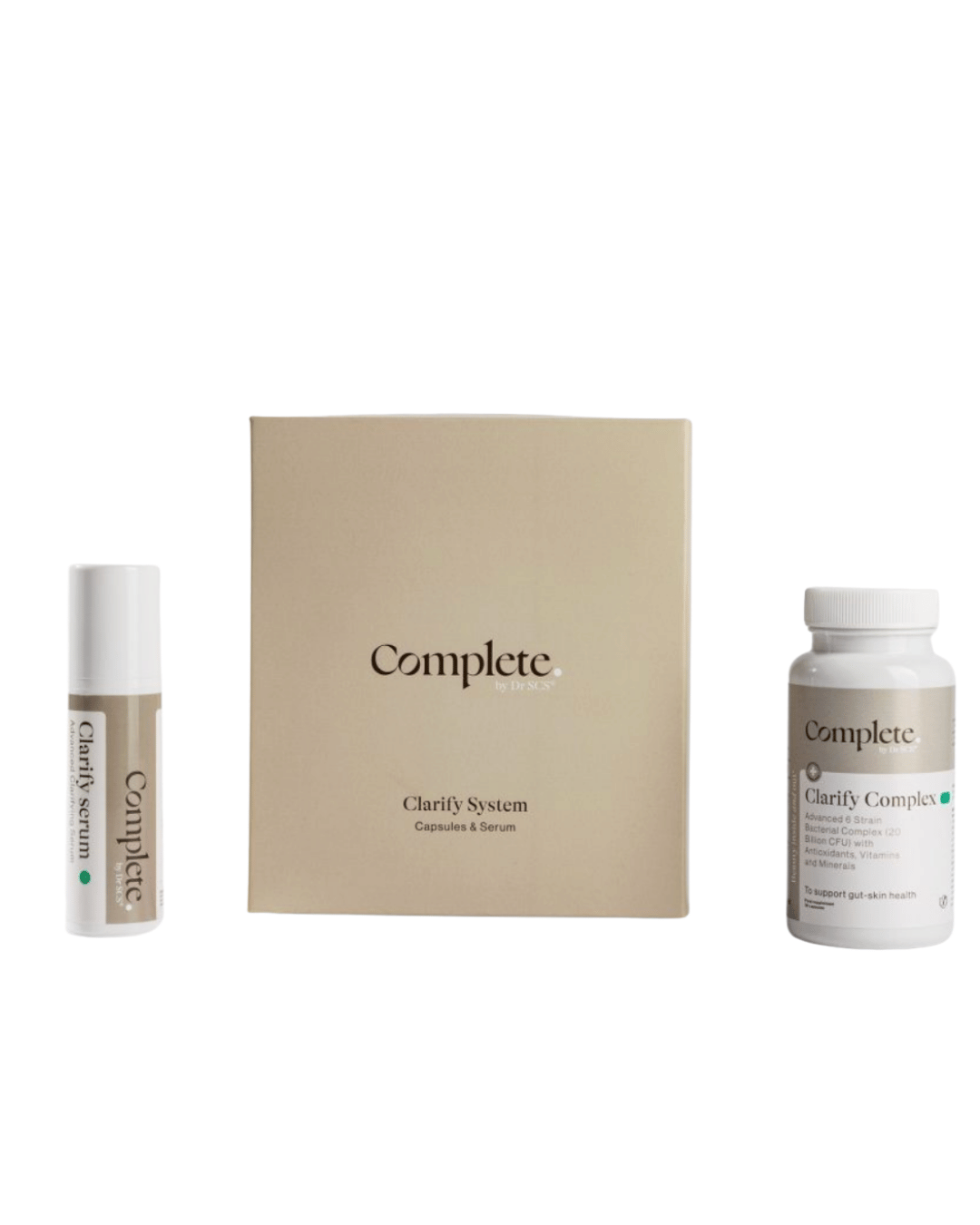
4. A topical strategy alongside the supplement. This is the part most often missed. The mechanistic case for combining oral and topical care is strong: the gut microbiome and the skin microbiome are both involved in skin health, and they are best supported in tandem. A supplement cannot do what topical care does at the skin barrier, and topical care cannot reach the inflammatory drivers that originate inside the body. The most considered formulations now bring probiotics, prebiotics and postbiotics together across both routes, supporting both microbiomes at once.
What to watch out for
The same King's College London review that pulled together 516 studies on probiotics and skin noted that one of the biggest weaknesses across existing trials is poor reporting of strains and doses. That is also one of the clearest red flags when comparing products. If a label cannot tell you exactly which strains are in the formula and at what dose, that is worth noting before you buy.
More broadly, be sceptical of products making claims around general radiance or anti-ageing benefits. The evidence base for these is thin compared to the evidence for inflammatory and blemish-prone skin. Good marketing does not always reflect good science, and in the probiotic category especially, the two can look very similar.
The growing evidence on the gut-skin axis is showing us that real skin health asks for something more than surface-level care: an approach that brings the inside and the outside together and treats them as the single connected system they have always been.
No items found.