
Do Blue Light Glasses Actually Work? What The Science Actually Says And When They're Worth It
Tired eyes, dull headaches, sleep that won't come: the complaints are real. But do blue light glasses actually help? Nabeel Sroya-Vara, founder of Vara Optical, on what the research says and where a filter is genuinely worth having.
It's late. The flat's dark, the city hums outside, and the only light in the room is coming from your laptop or phone. Sound familiar? London runs late: the night bus still going, the corner shop still lit, and the working day rarely clocks off when the office does. It follows you home, onto the sofa, into the small hours.
Which is exactly when the questions start. Tired eyes, a dull headache, sleep that won't come. And the eyewear world has an answer ready: blue light glasses. But, as the founder of an independent eyewear company born in South London, and with over a decade of experience across leading optical houses, I'm more interested in getting things right than selling you a story. So before you buy in, here's what I want you to know.
What blue light glasses actually are
Blue light is part of the visible spectrum, covering high-energy wavelengths roughly between 380 and 500 nanometres. It comes mostly from the sun, and in much smaller amounts from the laptops, smartphones and tablets we now stare at for hours on end. This high-energy light is what gets blamed for the modern trio of complaints: tired eyes, headaches and disrupted sleep.
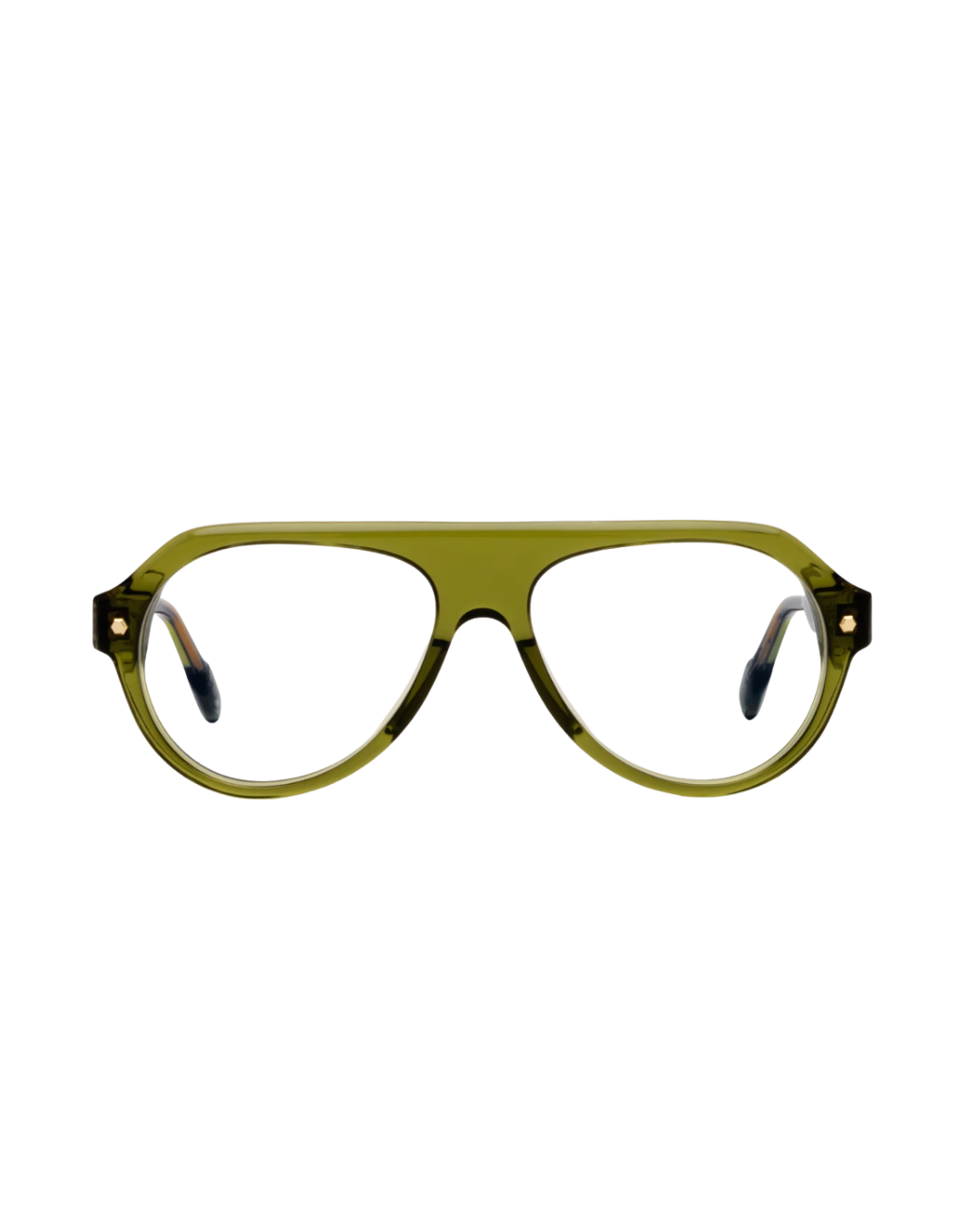
Blue light filter lenses carry a coating designed to reduce a portion of that light before it reaches your eyes. Look closely, and you'll catch a faint warmth in the lens, the same gentle shift your screen makes after sunset when Night Mode kicks in. The idea is straightforward: less high-energy light during long screen sessions, and less of it reaching you late at night when your body is trying to wind down.
What the research actually says
Here's where I want to stay honest. In 2023, Cochrane, widely considered the gold standard for reviewing medical evidence, analysed 17 randomised controlled trials and concluded that blue-light-filtering lenses probably make no large, proven difference to daytime eye strain on their own. Worth noting too: the blue light emitted by screens is significantly lower in intensity than natural daylight, measuring at roughly a thousandth of the blue light you'd get standing outside on a bright day (varying with multiple factors), so the idea that "screens are frying your retinas" is quite overblown.
But the same review was clear that the studies were mostly small and short-term, meaning this is as much about thin evidence as it is about a settled answer. And the picture is not uniform. There is better support for the evening use case. Blue light suppresses melatonin production by acting on specialised cells in the retina that are particularly sensitive to short-wavelength light. Melatonin is the hormone that signals to the body it is time to sleep, so suppressing it in the hours before bed can delay sleep onset and reduce sleep quality. This is the strongest evidence base for blue light filter use, and why limiting high-energy blue light in the hour or two before bed, whether through a filter, night mode, or simply putting the screen down, is a recommendation you’ll find across the board of many health professionals.
So where does that leave you?
Digital eye strain is real, but much of it comes down to how we use screens rather than the light they emit. Sustained near-focus places ongoing demand on the eye's focusing muscles, which contributes significantly to that heavy, tired feeling after a long day at a desk. Screen use also reduces our blink rate considerably, from around 15 times per minute in normal conditions to as few as five during concentrated screen work, which is one of the most overlooked contributors to dry, uncomfortable eyes.
Poor ambient lighting, bad posture, screens held too close and brightness levels that don't adjust to the room all compound the problem. The most effective habit costs nothing: the 20-20-20 rule, where every 20 minutes you look at something roughly 20 feet away for 20 seconds, gives the focusing muscles a chance to reset and encourages the eyes to blink and rehydrate naturally. Dimming your screen and enabling night mode in the evenings helps too.
A blue light filter is not a replacement for any of that. But it is a sensible additional measure if you spend significant time on screens, and importantly, the research found no consistent downsides to wearing them. If it makes a long day or a late night more comfortable, that is a real benefit worth having.
References
Tu Z, Pang Y. The Effect of Blink Rate and Visual Setting on the Symptoms of Digital Eye Strain. Investigative Ophthalmology and Visual Science. 2023;64(8):4000.
Digital Eye Strain: Comprehensive Review, PMC/NIH, 2022.
Silvani.M, Werder.R, Perret.C. The influence of blue light on sleep, performance and wellbeing in young adults: A systematic review
Yadav et al. Mitigating eye strain in the digital era: The efficacy of the 20-20-20 rule. Indian Journal of Clinical and Experimental Ophthalmology. 2025;11(4):670–675.
No items found.