A New Era Of Ceremonial Jewellery
Jewellery has long been intertwined with deep meaning, but classic styles are beginning to shift. Here, award-winning jeweller Ellis Mhairi Cameron shares why personalised pieces are more popular than ever.
.webp)

The idea of what a commitment ring looks like has evolved dramatically in recent years. I work with many couples who are rewriting what commitment looks like — couples who want to celebrate love and partnership on their own terms. They often tell me they want rings that feel equal, pieces that carry the same weight and intention for both partners. That resonates deeply with me. Jewellery should reflect real relationships, not a one-size-fits-all symbol.
More and more, people are moving away from traditional expectations and instead choosing pieces that feel personal and expressive. I see many clients who don’t fit into the traditional mould of what engagement or marriage once meant, so I think it's important to have options. I also see more and more clients who choose not to get married at all, but still want to wear rings symbolically, as a representation of their relationship. These pieces become markers of love, unity, and shared experience; not of a specific ceremony, but of an ongoing story.
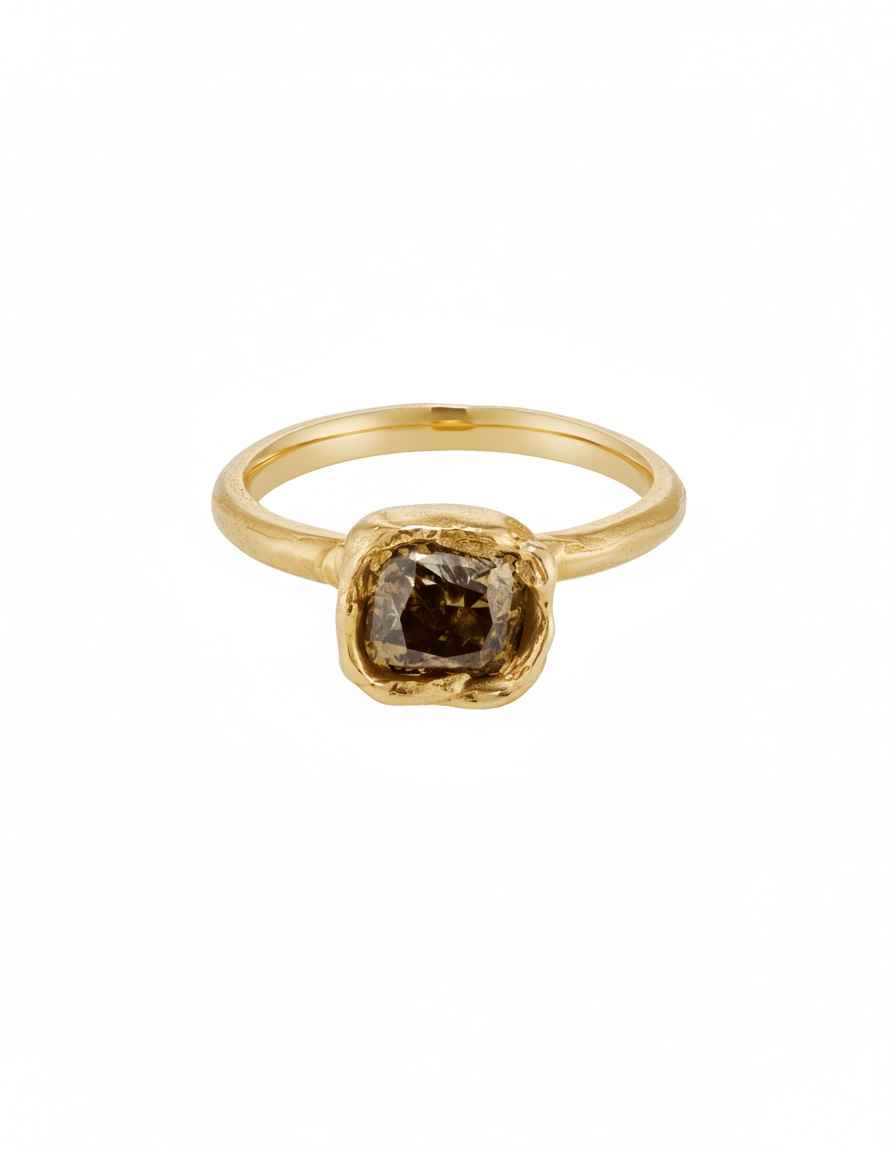
When I think about ceremonial or commitment rings, I’ve never been drawn to what we might call traditional. The classic solitaire, with its slim band and central stone, has never really felt like me. I love offering this style within my collections because it holds meaning for so many people, but I also wanted to create alternative shapes and styles that still feel symbolic, but aren't classic in style.
For me, a ceremonial ring should feel deeply personal. It’s not about what tradition dictates; it’s about how it makes you feel when it’s on your hand. I’ve always loved the symbolism of commitment, but I think the idea of what a “commitment ring” looks like has evolved so much, especially in recent years. The design should reflect the wearer — who they are, how they express themselves, and how they see their relationship.
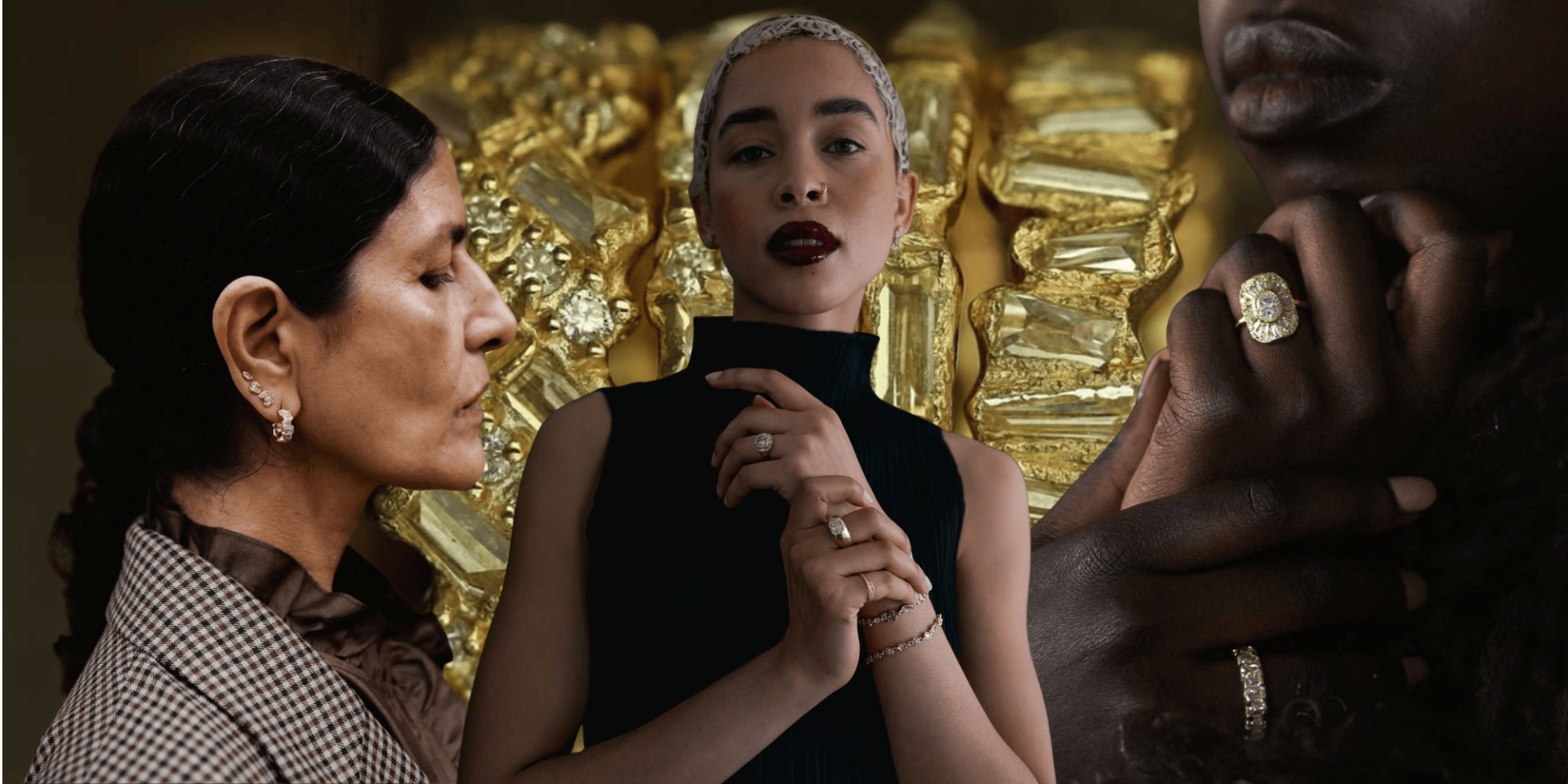
I personally wear a wide, signet-style ring with an oval diamond. It’s definitely a less traditional choice, but it felt like me. There’s a quiet strength in the boldness of a signet. It’s a shape that has historically symbolised identity, belonging and legacy; I love how that translates into a ceremonial context. It moves away from the idea of being given a ring, toward the idea of choosing one; something that reflects who you are and how you see your relationship.
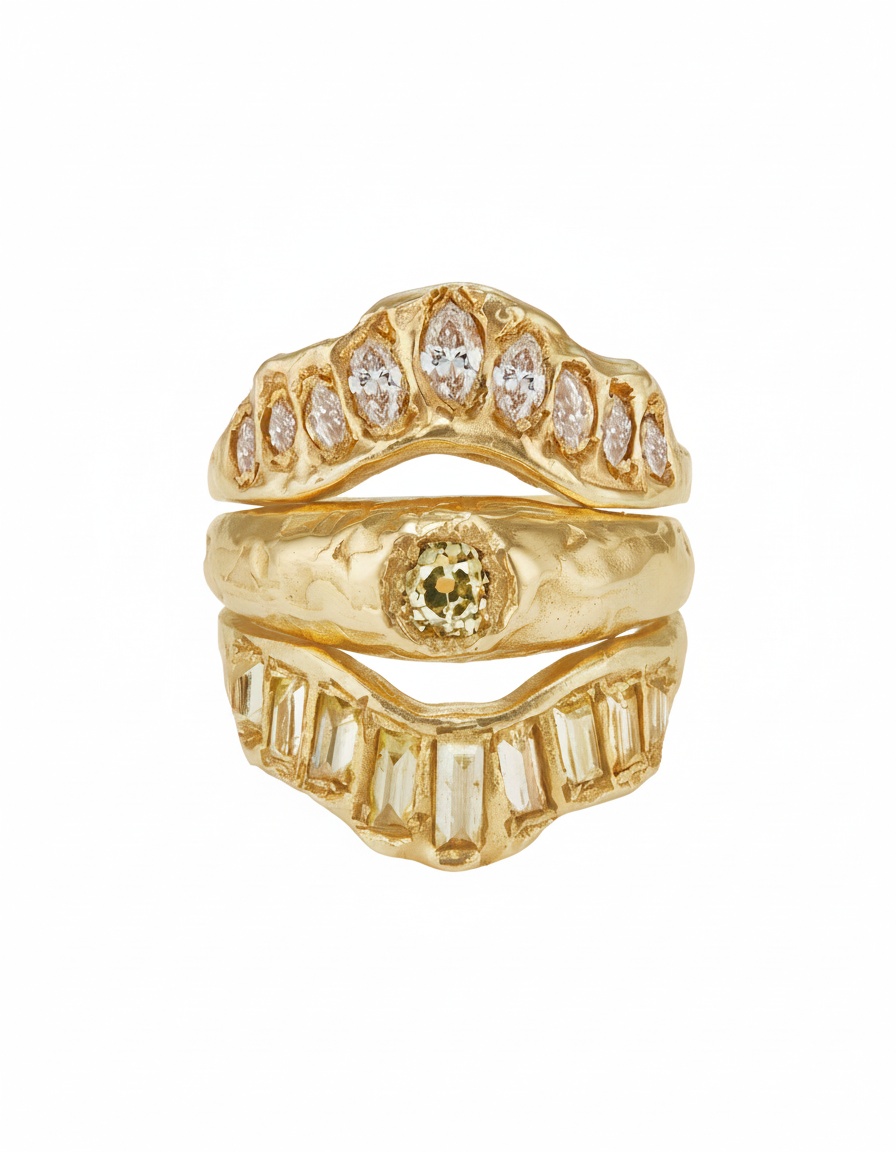
Design-wise, some of my favourite ceremonial pieces are those that challenge convention. My Scatter Rings, for example, have become a popular alternative. Many clients choose a single scatter band instead of the traditional solitaire and wedding band pairing.
Our diamond signet rings and wide diamond bands are also favourites. When set with a single stone, they subtly nod to tradition but still feel fresh and contemporary.
For me, a ceremonial ring isn’t about adhering to expectation. It’s about celebrating individuality, love and the stories that connect us. Whether it’s a scatter ring, a textured band, or a diamond signet, what matters most is that it feels authentically yours. Because commitment, at its core, is about authenticity and the jewellery we choose to mark it should be too.
No items found.